Blood Transfusion at Roadside Helps Save Crash Victim’s Life
5.27.2026
AMR, DeKalb County Fire, and The Blood Connection collaborate to deliver whole blood transfusions at the scene, setting a new standard for emergency care in Georgia.
When DeKalb County Fire pulled Charles Carpenter from the wreckage of a serious car crash earlier this year, his survival came down to timing—and access to care that most patients never receive.
On the side of a DeKalb County roadway, Carpenter was given a lifesaving blood transfusion before ever reaching a hospital. It’s a capability that remains rare across the country, with a small percentage of EMS agencies equipped to deliver whole blood in the field. Without that program in place, the outcome could have been very different.
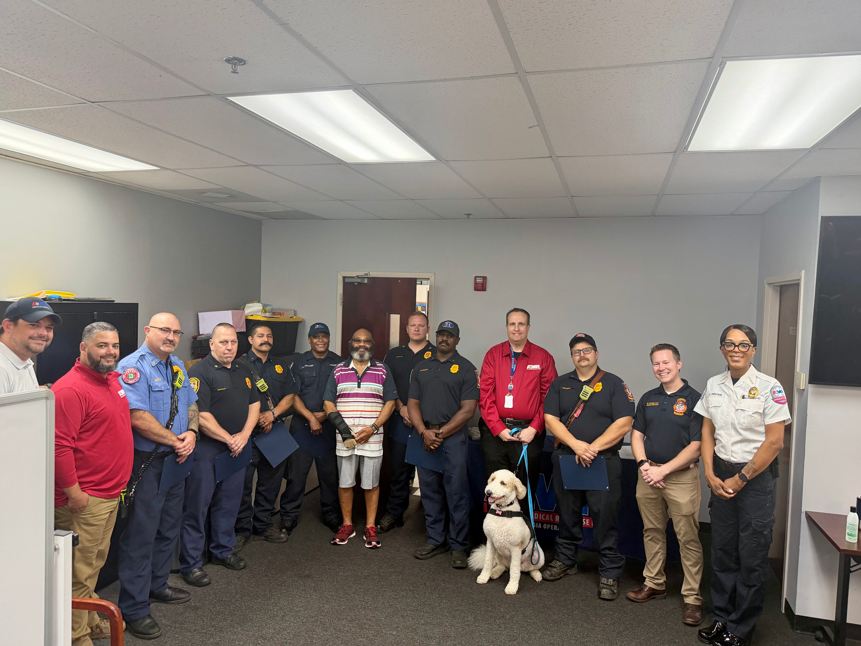
Carpenter was among the first patients in DeKalb County to receive this lifesaving treatment and was recently reunited with the paramedics and fire personnel who helped save his life, including American Medical Response (AMR) paramedic Andre Pinkston, who administered the whole blood transfusion at the scene. “We train for moments like this,” said Pinkston. “When a patient is losing blood, starting whole blood at the roadside can buy the critical time needed to save a life. If this crash had happened just weeks earlier—before the program was in place—the outcome could have been far worse.”
Severe and uncontrolled bleeding is the leading cause of preventable death for trauma patients, especially for car crash victims. For every minute a patient waits for blood, the risk of death significantly rises.
“The first minutes after severe blood loss are often the most critical,” said Dr. Esther Hwang, medical director for AMR DeKalb County. “If we can begin advanced resuscitation and blood transfusion earlier, we can help improve a patient’s chance of survival before they ever reach the hospital.”
Bringing Whole Blood to Dekalb County residents
The HART (Hemorrhage and Resuscitation Treatment) Program, as it’s called, equips select paramedics with the training and tools to administer whole blood transfusions in the field. “Administering whole blood in the field requires more than placing blood on an ambulance,” said AMR Regional Director Chris Valentin, “The program relies on specialized refrigeration, advanced paramedic training, continuous blood monitoring, and a coordinated donor network.”
In the first six months of the program, paramedics have administered more than 100 units of whole blood, helping dozens of DeKalb County residents, including those with traumatic injuries, but also serious medical conditions with rapid blood loss like gastrointestinal bleeds, and postpartum hemorrhaging. The program is a partnership between AMR, Dekalb County Fire Rescue and The Blood Connection.
“Our mission has always been simple: to give every patient the best possible chance of survival,” said Darnell Fullum, DeKalb County director of public safety. “This program takes that commitment even further by bringing advanced emergency care directly to patients during some of the most critical moments of an emergency.”
“We are honored to support this effort,” said Delisa English, president and CEO of The Blood Connection. “Community blood donors are the backbone of emergency care, and their generosity helps make lifesaving interventions possible before patients ever reach the hospital.”
Advancing Emergency Medicine: National Context and Local Leadership
Nationwide, whole blood programs remain uncommon, largely due to logistics and reimbursement. Maintaining an onboard blood supply requires specialized refrigeration, continuous temperature monitoring, and a dependable donor network. Those operational requirements—combined with limited reimbursement from Medicare, Medicaid, TRICARE, and private insurers—have historically slowed adoption.
DeKalb County has found ways to overcome those barriers. “Blood is a perishable lifeline that must be used wisely,” said Hwang. After completing advanced post-licensure training developed by AMR and DeKalb County medical directors, selected AMR paramedics are now credentialed to administer transfusions directly at the scene.
“To deploy blood responsibly, AMR uses an evidence-based planning process to .identify where transfusions are most likely to be needed,” adds Valentin “Using hospital data and community call patterns, our team pinpointed high-impact areas and staged rapid-response units staffed by specially trained paramedics—ready to deliver whole blood without delay on qualifying calls.”
With committed partners and a community of donors, DeKalb County is making whole-blood transfusion a frontline capability—raising the bar for trauma care and giving patients their best chance when seconds count. AMR’s HART Program offers a practical model for bringing lifesaving interventions closer to the moment they’re needed most.
On the side of a DeKalb County roadway, Carpenter was given a lifesaving blood transfusion before ever reaching a hospital. It’s a capability that remains rare across the country, with a small percentage of EMS agencies equipped to deliver whole blood in the field. Without that program in place, the outcome could have been very different.
Carpenter was among the first patients in DeKalb County to receive this lifesaving treatment and was recently reunited with the paramedics and fire personnel who helped save his life, including American Medical Response (AMR) paramedic Andre Pinkston, who administered the whole blood transfusion at the scene. “We train for moments like this,” said Pinkston. “When a patient is losing blood, starting whole blood at the roadside can buy the critical time needed to save a life. If this crash had happened just weeks earlier—before the program was in place—the outcome could have been far worse.”
Severe and uncontrolled bleeding is the leading cause of preventable death for trauma patients, especially for car crash victims. For every minute a patient waits for blood, the risk of death significantly rises.
“The first minutes after severe blood loss are often the most critical,” said Dr. Esther Hwang, medical director for AMR DeKalb County. “If we can begin advanced resuscitation and blood transfusion earlier, we can help improve a patient’s chance of survival before they ever reach the hospital.”
Bringing Whole Blood to Dekalb County residents
The HART (Hemorrhage and Resuscitation Treatment) Program, as it’s called, equips select paramedics with the training and tools to administer whole blood transfusions in the field. “Administering whole blood in the field requires more than placing blood on an ambulance,” said AMR Regional Director Chris Valentin, “The program relies on specialized refrigeration, advanced paramedic training, continuous blood monitoring, and a coordinated donor network.”
In the first six months of the program, paramedics have administered more than 100 units of whole blood, helping dozens of DeKalb County residents, including those with traumatic injuries, but also serious medical conditions with rapid blood loss like gastrointestinal bleeds, and postpartum hemorrhaging. The program is a partnership between AMR, Dekalb County Fire Rescue and The Blood Connection.
“Our mission has always been simple: to give every patient the best possible chance of survival,” said Darnell Fullum, DeKalb County director of public safety. “This program takes that commitment even further by bringing advanced emergency care directly to patients during some of the most critical moments of an emergency.”
“We are honored to support this effort,” said Delisa English, president and CEO of The Blood Connection. “Community blood donors are the backbone of emergency care, and their generosity helps make lifesaving interventions possible before patients ever reach the hospital.”
Advancing Emergency Medicine: National Context and Local Leadership
Nationwide, whole blood programs remain uncommon, largely due to logistics and reimbursement. Maintaining an onboard blood supply requires specialized refrigeration, continuous temperature monitoring, and a dependable donor network. Those operational requirements—combined with limited reimbursement from Medicare, Medicaid, TRICARE, and private insurers—have historically slowed adoption.
DeKalb County has found ways to overcome those barriers. “Blood is a perishable lifeline that must be used wisely,” said Hwang. After completing advanced post-licensure training developed by AMR and DeKalb County medical directors, selected AMR paramedics are now credentialed to administer transfusions directly at the scene.
“To deploy blood responsibly, AMR uses an evidence-based planning process to .identify where transfusions are most likely to be needed,” adds Valentin “Using hospital data and community call patterns, our team pinpointed high-impact areas and staged rapid-response units staffed by specially trained paramedics—ready to deliver whole blood without delay on qualifying calls.”
With committed partners and a community of donors, DeKalb County is making whole-blood transfusion a frontline capability—raising the bar for trauma care and giving patients their best chance when seconds count. AMR’s HART Program offers a practical model for bringing lifesaving interventions closer to the moment they’re needed most.