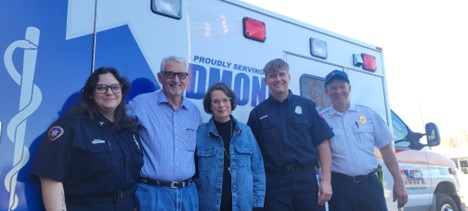
Patient Reunited with EMS Crew After Cardiac Arrest Call
2.26.2026
An Edmond, OK woman gets the rare opportunity to meet with the first responders who saved her life.
In the early hours of January 29, Becky Madison began to feel unwell. Then, without warning, she fainted at home, prompting her husband to call 911. Paramedic Alex Canaga and emergency medical technician (EMT) Tres Sturdivan arrived and evaluated Madison, noting she was experiencing severe abdominal pain.
“We initially thought she was severely dehydrated and decided to transport her for additional screening,” Canaga said. That decision would save her life.
Before transporting, Canaga conducted a 12lead ECG, a standard test that provides a comprehensive view of the heart’s electrical activity. Moments later, Madison went into cardiac arrest, and the crew began treatment immediately.
“I was shocked when I noticed she was coding,” Canaga said. “There was no typical indication of cardiac distress. Moments before, she was awake and alert. Thankfully we hadn’t left yet, and I had Tres in the back with me to assist.”
After stabilizing Madison and successfully transporting and transferring care at the hospital, Canaga and Sturdivan returned to service. Like many EMS providers, they did not know the outcome of the call. This past week, Madison reunited with the first responders who helped save her life, giving the group a chance to meet in person and reflect on her treatment and recovery.
“Very rarely do our first responders receive follow-up from patients,” said Kier Smith, operations manager for AMR Edmond. “It’s a special moment for them to see the story come full circle and witness the impact of the care they provide.”
For Canaga and Sturdivan, both early in their EMS careers, the call remains a defining moment.
“This was our first shift together, so it is exciting to have a win this early on,” Sturdivan said. “It really reinforced why we do this work. You realize your contribution truly matters.”
Heart related symptoms in women are often subtle or atypical and can go unrecognized until a situation becomes critical. Common warning signs of a heart attack for women include:
Stories like Madison’s underscore the importance of early recognition and immediate action in cardiac emergencies. While rapid professional care is essential, early action by those nearby can be lifesaving. Bystanders who know how to perform CPR can help sustain a patient and buy crucial time until help arrives. For more information on CPR training, please visit cpr.heart.org
“We initially thought she was severely dehydrated and decided to transport her for additional screening,” Canaga said. That decision would save her life.
Before transporting, Canaga conducted a 12lead ECG, a standard test that provides a comprehensive view of the heart’s electrical activity. Moments later, Madison went into cardiac arrest, and the crew began treatment immediately.
“I was shocked when I noticed she was coding,” Canaga said. “There was no typical indication of cardiac distress. Moments before, she was awake and alert. Thankfully we hadn’t left yet, and I had Tres in the back with me to assist.”
After stabilizing Madison and successfully transporting and transferring care at the hospital, Canaga and Sturdivan returned to service. Like many EMS providers, they did not know the outcome of the call. This past week, Madison reunited with the first responders who helped save her life, giving the group a chance to meet in person and reflect on her treatment and recovery.
“Very rarely do our first responders receive follow-up from patients,” said Kier Smith, operations manager for AMR Edmond. “It’s a special moment for them to see the story come full circle and witness the impact of the care they provide.”
For Canaga and Sturdivan, both early in their EMS careers, the call remains a defining moment.
“This was our first shift together, so it is exciting to have a win this early on,” Sturdivan said. “It really reinforced why we do this work. You realize your contribution truly matters.”
Heart related symptoms in women are often subtle or atypical and can go unrecognized until a situation becomes critical. Common warning signs of a heart attack for women include:
- Heavy ache in the chest, or in the back between the shoulder blades
- A sharp pain in the upper body
- Shortness of breath
- Experiencing a cold sweat
- Unusual or unexplained tiredness
- Dizziness or light-headedness
- Feeling sick to the stomach
Stories like Madison’s underscore the importance of early recognition and immediate action in cardiac emergencies. While rapid professional care is essential, early action by those nearby can be lifesaving. Bystanders who know how to perform CPR can help sustain a patient and buy crucial time until help arrives. For more information on CPR training, please visit cpr.heart.org